
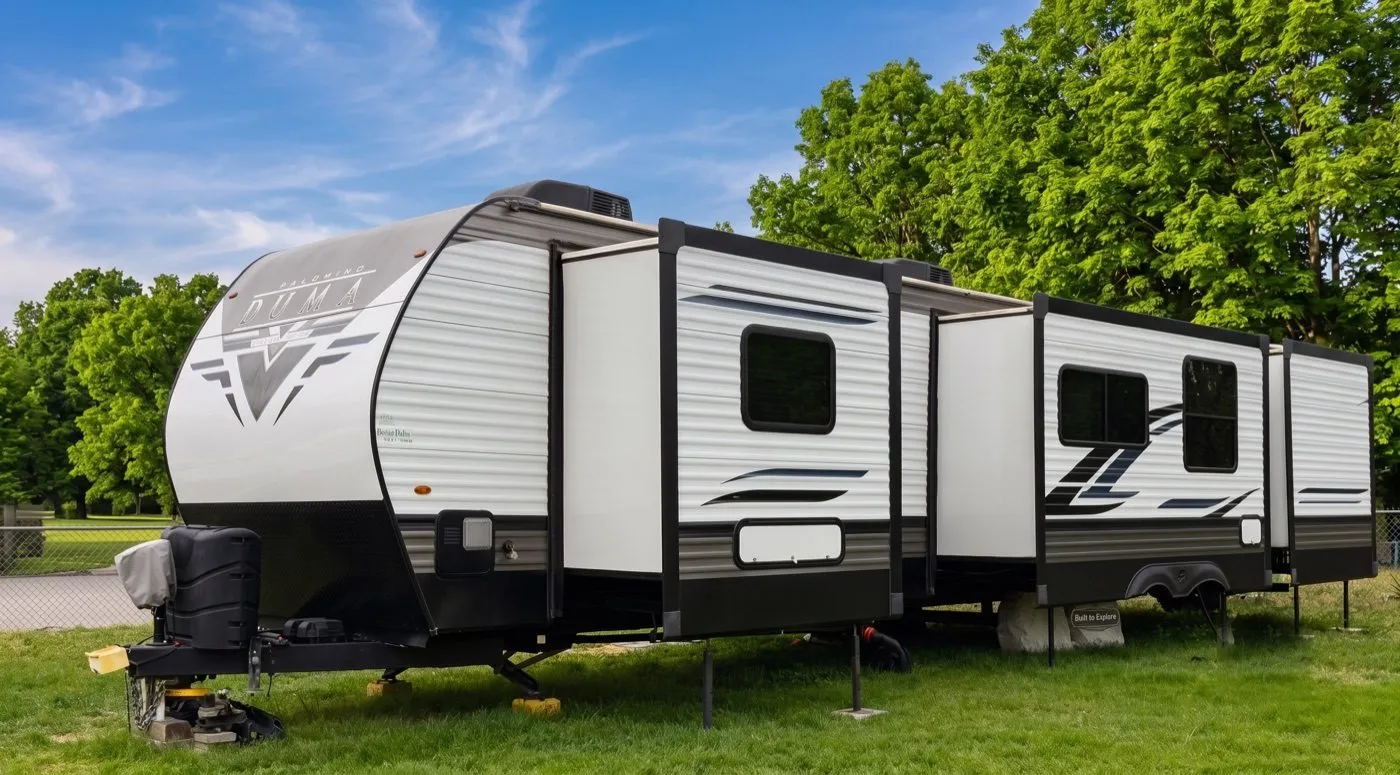
When hail, a tornado, a wildfire, or a hurricane leaves your Texas home unlivable, your homeowners policy may pay for somewhere to stay while repairs happen. For many families, the best place is still home: a furnished travel trailer set up on your own lot, close to school, work, your pets, and the crew rebuilding your house. 1st Choice Living has placed trailers like this nationwide since 2004, and we bring the same process to Texas. We have set up housing in Abilene, Alvarado, Alvin, Amarillo, Aransas Pass, Arlington, Austin, Beaumont, Bedford, Bellville, Brownsville, Bryan, Burleson, Dallas, Fort Worth, Houston, San Antonio, and many other Texas communities.
What Texas homeowners are recovering from
Texas sees almost every kind of property damage. In April 2026, the National Weather Service office in Fort Worth confirmed 13 tornadoes across North and Northeast Texas over a six-day stretch, with hail reported up to softball size in some counties.
Wildfire is another big one. The 2011 Texas wildfire season burned across the state, with major fires at Bastrop and Possum Kingdom destroying homes and forcing evacuations. The Texas A&M Forest Service explains that the wildland urban interface—where homes sit next to or mixed in with undeveloped land—is often the area most at risk.
On the coast, hurricanes add wind and flood damage. Hurricane Harvey made landfall in South Texas in August 2017, and Hurricane Ike hit Galveston and East Texas in September 2008, leaving many families displaced for months.
How the Texas Department of Insurance explains additional living expenses
The Texas Department of Insurance (TDI) explains that most home policies pay some additional living expenses if you cannot live in your house while your insurance is paying to repair it. Key points from TDI's consumer page:
- It follows covered damage. TDI explains that coverage applies when your home was damaged by an event your policy covers.
- There is a limit. TDI says most policies pay 10 to 20 percent of what the house is insured for, usually up to 12 months or until that amount is used.
- Running out is on you. TDI warns that if you reach your limit before your home is repaired, you pay the rest yourself.
- Flood and coastal wind are separate. TDI explains that most homeowners policies don't cover flood, and windstorm policies are separate.
How a trailer on your lot works with your ALE
1st Choice Living bills your carrier directly under ALE, so on a covered claim you pay $0 out of pocket. We track your placement against your ALE limit, so you and your adjuster can see where things stand while the rebuild moves forward. You have one named contact from the first call to pickup.
Our furnished travel trailers sleep 2 to 10. We deliver, level, and set up the unit on your property. Utilities are connected by licensed, insured contractors. We document site conditions at setup and takedown, so everyone has a clear record.
Local rules in Texas are set by your city or county
We did not find a single statewide Texas rule on living in a travel trailer on your own lot while you rebuild. It is handled by your city or county, and the answer can differ from one town to the next.
The Texas General Land Office's fact sheet from the Hurricane Harvey housing mission shows the kind of details local officials look at: sewer, power, and water had to be available and working at the site, a separate electric meter pole was sometimes needed, and contractors coordinated with local government officials on permits.
We check your local rules before delivery. If you want a head start, call your city or county permitting office and ask about temporary occupancy of a travel trailer during repairs.
Texas recovery resources
The Texas Division of Emergency Management (TDEM) says insurance is the first resource in recovering from a disaster. TDEM also points Texans to FEMA Individual Assistance at DisasterAssistance.gov or 1-800-621-3362, SBA disaster loans, and 2-1-1 Texas for community resources.
For insurance questions, TDI's help line is 800-252-3439.
For crews and agencies working in Texas
The same furnished units house crews on job sites and support agencies coordinating displaced households. A data center construction crew needing housing before the site opened stayed in our trailers while the facility was built. Adjusters get one named contact and a placement tracked against the policy limit.
Frequently asked questions
Will my Texas homeowners policy pay for a travel trailer on my property?
The Texas Department of Insurance explains that most home policies pay reasonable additional living expenses, up to the policy limit, when covered damage makes your home unlivable. Your carrier and adjuster decide what is approved. We work with them and bill the carrier directly, so a covered claim is $0 out of pocket for you.
My home flooded. Does ALE apply?
TDI explains that most homeowners policies don't cover flood, and National Flood Insurance Program policies don't pay additional living expenses. If flood coverage was added to your home policy, it might. Ask your agent or adjuster.
Do I need a permit to live in a trailer on my own lot in Texas?
It depends on your city or county. We did not find a statewide Texas rule. We check local requirements before delivery.
Get started
Send us your claim number, your adjuster's contact, and the property address. We confirm local rules, stage a unit near you, and set it up on your property.
Want the details on placement first? Read about on-site RV housing.