
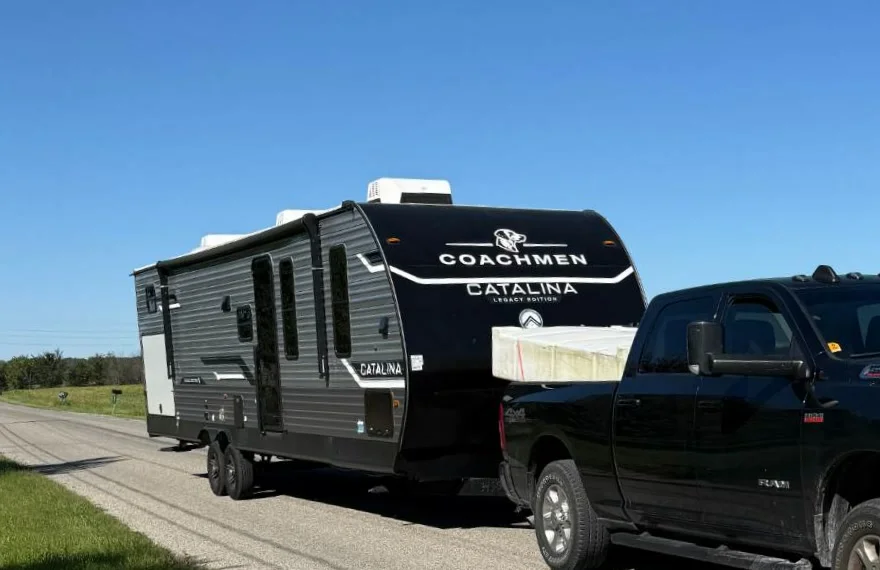
Most families never think about temporary housing until the night they need it. The claim is open, the adjuster says the policy includes Additional Living Expenses, and the next question lands on you: where are you going to stay? Some carriers bring in a housing company to answer it. Others pay you back for what you spend and leave the arranging to you. Either way, you can ask questions, and you can ask for what your family actually needs. 1st Choice Living has placed furnished travel trailers on homeowners’ own property, nationwide, since 2004. This guide is what we walk people through when they call us on their own.
How Additional Living Expenses works
Additional Living Expenses, also called ALE or loss of use, is the part of a homeowners policy that pays the extra cost of living somewhere else while the house cannot be lived in. Five things decide how it works for you.
- It starts with covered damage. The house has to be unlivable because of damage from something the policy covers. The Texas Department of Insurance notes that leaving because the power is out does not qualify on its own.
- It pays the difference. The National Association of Insurance Commissioners (NAIC) explains that ALE pays the difference between what you normally spend to live and what you spend while you are displaced. Your mortgage payment is still yours.
- It has a limit. Some policies set a dollar limit, and some add a time limit. The Texas Department of Insurance says most policies pay 10 to 20 percent of what the house is insured for, and that the limit is listed on your declarations page.
- It is separate from the repair money. The South Carolina Department of Insurance points out that the ALE check has nothing to do with repairs and should be made out to you, not your mortgage lender.
- Receipts are the proof. Keep every receipt for the added costs. The carrier uses them to decide what it pays back.
If the ALE limit runs out before the house is finished, the Texas Department of Insurance warns that the rest is on you. Learn your limit at the start of the claim, and keep an eye on it the whole way through.
Setting up your own housing, step by step
- Get the basics from the claim. Your claim number, your carrier, and your adjuster’s name, phone, and email. Keep them in one place.
- Ask about ALE before you commit. The North Carolina Department of Insurance advises checking with your company before you rent temporary shelter, so you know what it will pay for. Ask for the limit in dollars and in months.
- Ask for direct billing. Ask whether the carrier will pay the housing provider directly, so you are not fronting the cost. That is how we work, so settle it before anything is signed.
- Decide what your family needs. Count the beds and the pets, and think about school, work, and how close you need to be to the house. A hotel can cover a few nights. A long repair is a different problem.
- Put the price in front of your adjuster. Whatever you choose, send your adjuster the written terms and ask for approval in writing. An email you can save works.
- Track the stay. Keep receipts, note what has been paid, and tell your adjuster as soon as the repair schedule slips.
Why families choose a trailer on their own lot
On a long repair, a furnished travel trailer on your own property often fits better than a hotel room across town. You are next to the house when the adjuster and the contractors come by, the kids keep their school, the pets stay with you, and you cook in your own kitchen instead of eating out against the ALE limit.
It needs room on the lot and local rules that allow a temporary RV during a repair. We check that for your address before anything is delivered. The details are on on-site RV housing.
Choosing who provides the trailer
Your family has already had one disaster. Picking the wrong trailer partner can cause a second one, so ask who you are actually renting from.
- Built for living, or for a weekend? Many companies that rent travel trailers mostly do vacation and weekend rentals and take a long-term placement now and then. A camping trailer is not set up for a family to live in through a months-long repair.
- Who owns the trailer? Some trailers come from peer-to-peer rentals, owned by a private person and not by the company placing it. If that owner has a loan on the trailer and falls behind, the lender can repossess it, even with your family living in it.
- Does the loan allow renting it out? Many RV loans are written for personal, recreational use. A lender that finds the trailer rented out as long-term housing can treat that as a broken loan agreement and take the trailer back.
We are one of the few companies that focus only on travel trailers as temporary housing, for families, crews, and agencies. We do not rent trailers for vacations or weekends. Every trailer we place is company owned and set up for people living in it day to day, not for a weekend at the lake.
What happens when you call us
You do not need your carrier or a housing company to send you to us. A homeowner can call directly. Here is how it goes.
- Call or send the request form. We ask about the property, the claim, and how many people and pets need a place to sleep.
- Have your claim details ready. Your claim number, your carrier, your adjuster’s contact, and the property address.
- We check your address. Before delivery, we confirm what your city or county requires for a temporary RV on a residential lot during a repair.
- We work with whoever is on your file. Your adjuster, the housing company your carrier assigned, or whoever referred you can work with us directly. If you are not sure what your policy says, we walk through it with you.
- Delivery and setup. A furnished unit is delivered, leveled, and set up. Utility connections are completed by licensed, insured contractors from our preferred vendor network, and site conditions are documented at setup.
- During the stay. One named contact, scheduled service visits, and the placement tracked against your ALE limit.
- When you move home. We coordinate the pickup with you and your adjuster and document site conditions again at takedown.
On a covered claim, $0 out of pocket. We bill your carrier, or the housing company handling your file, directly under ALE, so you are not fronting the cost and waiting on a check.
The trailer side, from sizes to delivery day, is explained by Temporary RV Living: when insurance pays for your trailer.
If a housing company is already on your file
Some carriers bring in a temporary housing company to find a place for you. If what has been offered does not fit, because it is far from the house, will not take your pets, or does not have room for everyone, tell your adjuster and ask whether a trailer on your own lot is an option. We also work with housing companies, so a trailer from us can come through the company already on your file.
Whatever put you out of the house
A storm, a fire, a burst pipe, a flood, or a tree through the roof. The cause changes the claim, not the housing. If the damage is covered and the house cannot be lived in, the same questions about ALE apply. A few causes have their own guides: after a storm, after a house fire, and after a flood.
One note on trees. The North Carolina Department of Insurance explains that most policies pay reasonable costs to remove a tree that damaged a covered structure, and generally not one that only fell in the yard. Photograph it where it lies before it is cut up and hauled away.
If the claim is getting hard
Claims get stressful, and the people on the other end are often carrying far more files than yours. A few habits keep things moving.
- Put it in writing. After every call, send a short email that repeats what was agreed.
- Keep one log. Dates, names, what was said, and what was sent.
- Ask who is next. If your adjuster changes, get the new contact’s name and number right away.
- Know where to go for help. Every state has an insurance department that answers consumer questions and takes complaints. The NAIC keeps a directory of state insurance departments.
Our state guides cover how each state’s insurance department explains ALE, and the local recovery resources: Alabama, Arkansas, Colorado, Florida, Georgia, Kansas, Kentucky, Louisiana, Mississippi, Missouri, North Carolina, Oklahoma, South Carolina, Tennessee, Texas, Virginia.
Questions to ask your adjuster
Write these down before the call, and write the answers next to them.
- Does my claim include Additional Living Expenses, and what is the limit in dollars and in months?
- Can I choose my own temporary housing, and do you need to approve it first?
- Is a furnished travel trailer on my own property an eligible expense?
- Will you pay the housing provider directly?
- Can I get an advance on ALE?
- What receipts and records do you need, and where do I send them?
- If the repair runs longer than planned, how do we extend the housing?
- If you are reassigned, who becomes my contact?
And ask any trailer company you are considering:
- Do you own this trailer, or does a private owner?
- Is there a loan on it, and does the lender allow it to be rented as long-term housing?
- Is it set up for living in full time through a long repair, or for camping trips?
- Who connects the utilities, and who services it while we live in it?
Frequently asked questions
Can I arrange my own temporary housing on an insurance claim?
Often, yes. Additional Living Expenses, also called loss of use, generally pays back the reasonable extra cost of living somewhere else while a covered loss keeps you out of your home, up to your policy limit. Ask your adjuster to approve the housing before you commit to it, and get the approval in writing.
Do I have to use the housing company my insurance company sent?
That depends on your policy and your carrier, so ask your adjuster directly. If what has been offered does not fit your family, explain why and ask what other options the policy allows, including a furnished trailer on your own property.
Will insurance pay for a travel trailer on my property while my house is repaired?
If the damage is a covered loss, from a storm, a fire, water, or a tree through the roof, the house cannot be lived in, and your policy includes Additional Living Expenses, a trailer on your own lot is the kind of housing that coverage is meant for. Your adjuster confirms it. On a covered claim, 1st Choice Living bills the carrier directly.
Do I have to pay first and wait to be reimbursed?
Not for the trailer. On a covered claim, we bill the carrier, or the housing company handling your file, directly, so you are not fronting the cost. Ask your adjuster to approve direct billing before delivery.
Does it matter who owns the travel trailer I rent?
Yes. A trailer rented through a peer-to-peer service may belong to a private owner with a loan on it, and many RV loans are written for personal, recreational use only. If the owner falls behind or the lender finds the trailer rented out as long-term housing, the lender can repossess it while you are living in it. Every 1st Choice Living trailer is company owned and set up for long-term living.
How much will my policy pay for temporary housing?
Your declarations page shows the limit. The Texas Department of Insurance says most policies pay 10 to 20 percent of what the house is insured for, and some policies also set a time limit. Only the extra cost above your normal living expenses counts.
Who can I call if I have a problem with my claim?
Start with your adjuster, and ask for a supervisor if the problem is not resolved. Every state also has an insurance department that answers consumer questions and takes complaints. The NAIC lists every state department on its website.
Your policy covers it. We can set it up.
Call or send the request form with your claim number and your adjuster’s contact. One named contact, local rules checked before delivery, and direct billing to your carrier where the claim covers it.
Sources (checked October 12, 2026)
- https://content.naic.org/article/what-are-additional-living-expenses-and-how-can-insurance-help
- https://www.tdi.texas.gov/tips/additional-living-expenses.html
- https://www.ncdoi.gov/consumers-guide-homeowners-insurance/open
- https://www.doi.sc.gov/953/Understanding-the-Claim-Payout-Process
- https://content.naic.org/state-insurance-departments