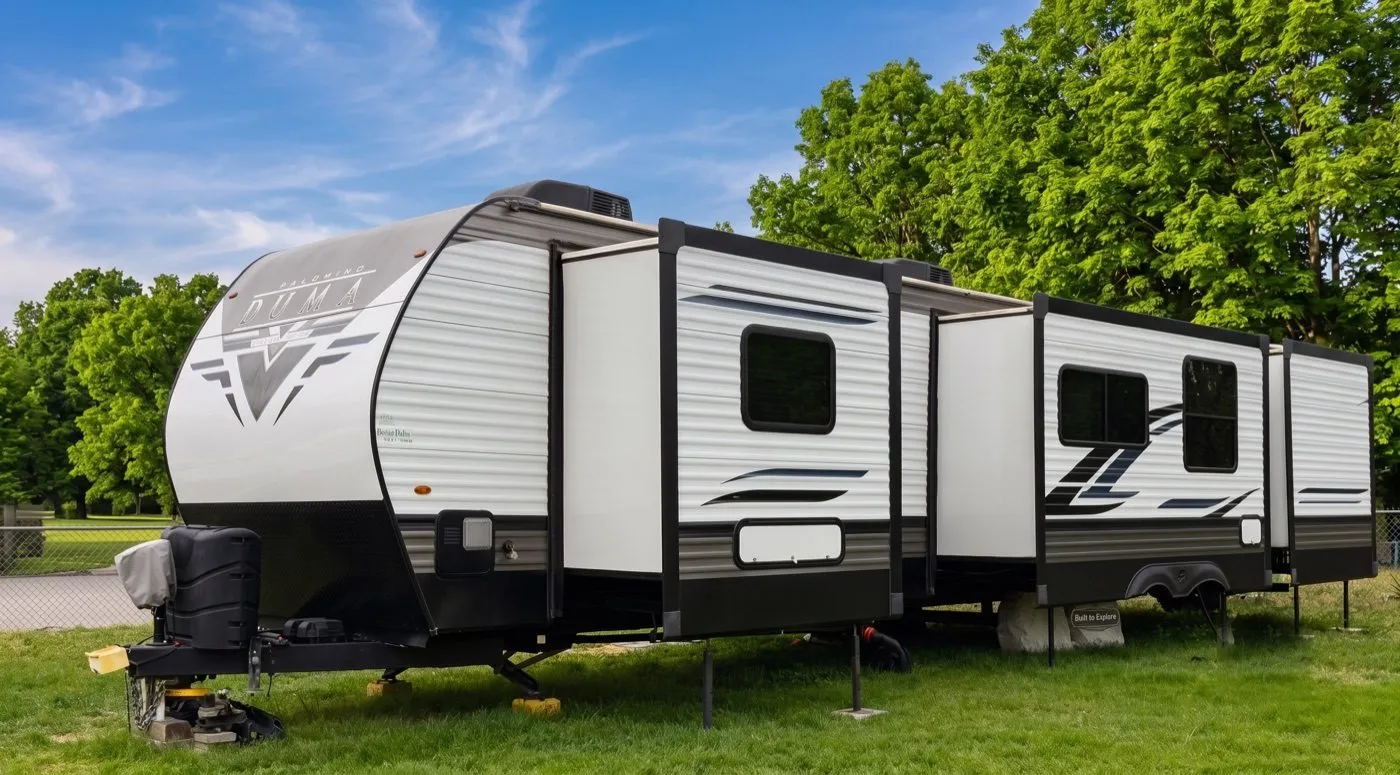
When a hurricane, a flood, or an ice storm leaves your North Carolina home unlivable, your homeowners policy may pay for somewhere to stay while it is repaired. For many families, the best place is still home: a furnished travel trailer set up on your own lot, close to school, work, your pets, and the crew rebuilding the house. 1st Choice Living has provided on-site temporary housing nationwide since 2004, and this page explains how it works in North Carolina.
What North Carolina homeowners are recovering from
Hurricane Helene brought historic flooding to Western North Carolina on September 26 and 27, 2024. The National Weather Service office in Greenville-Spartanburg reports that areas along and near the Blue Ridge escarpment saw widespread rainfall totals of 14 to 20 inches, with locally 2 feet or more, and that hundreds of debris flows occurred across the North Carolina mountains. Along the Swannanoa River, hundreds of structures were destroyed from Black Mountain downstream to Asheville. A federal major disaster was declared for North Carolina on September 28, 2024.
Helene was the worst of it, not the only risk. ReadyNC, the state’s emergency preparedness site, notes that all parts of North Carolina have been hit by tornadoes, floods, hurricanes, lightning strikes, and snow and ice storms.
How the North Carolina Department of Insurance explains additional living expenses
The North Carolina Department of Insurance (NCDOI) explains in its After a Disaster brochure that most homeowners policies pay additional living expenses while your property is being repaired. Key points from NCDOI:
- Ask before you rent. NCDOI says to check with your insurance company or agent, before renting temporary shelter, to find out what expenses will be reimbursed.
- Know your limit. NCDOI suggests asking about your ALE limits so you know whether the policy has a dollar limit or a time limit.
- Save every receipt. NCDOI explains that ALE may cover hotels, reasonable restaurant meals, and other expenses, and says to save all your receipts.
- Flood is separate. NCDOI explains that homeowners policies do not cover flood damage.
This is general information, not legal or coverage advice. Your policy and your adjuster decide what is covered.
How a trailer on your lot works with your ALE
1st Choice Living bills your carrier directly under ALE, so on a covered claim you pay $0 out of pocket and you are not fronting lodging costs and waiting on reimbursement. We track your placement against your ALE limit, so you and your adjuster can see where things stand while the rebuild moves forward. You have one named contact from the first call to pickup.
Our furnished travel trailers sleep 2 to 10. We deliver, level, and set up the unit on your property. Utilities are connected by licensed, insured contractors. We document site conditions at setup and takedown, so everyone has a clear record.
Local rules in North Carolina are set by your city or county
We did not find a standing statewide North Carolina rule on living in an RV or travel trailer on your own lot while you rebuild. It is handled by your city or county, and the answer can differ between a mountain county and a coastal town.
After Helene, the General Assembly passed temporary provisions for temporary housing in the declared counties in Session Law 2024-57, such as connecting temporary housing to an existing septic system. Those provisions were tied to the Helene emergency, and they do not name RVs or travel trailers. We check your local requirements before delivery. If you want a head start, call your county permitting office and ask about temporary occupancy of a travel trailer during repairs.
North Carolina recovery resources to know
North Carolina Emergency Management’s Individual Assistance page explains that after a declared disaster, the program helps homeowners and renters whose primary residences were damaged or destroyed, including funds to rent a different place to live. You apply with FEMA at DisasterAssistance.gov or 1-800-621-3362.
For insurance questions, NCDOI’s consumer line is toll-free at 855-408-1212.
For crews and agencies working in North Carolina
The same furnished units house crews on job sites and support agencies coordinating displaced households. Adjusters get one named contact and a placement tracked against the policy limit.
Frequently asked questions
Will my North Carolina homeowners policy pay for a trailer on my property?
The North Carolina Department of Insurance explains that most homeowners policies pay additional living expenses while your property is being repaired, and that you should ask your company what will be reimbursed before you arrange temporary shelter. Your carrier and adjuster decide what is approved. We bill the carrier directly, so a covered claim is $0 out of pocket for you.
Is there a limit on additional living expenses?
Usually. NCDOI suggests talking with your agent or insurance company about your ALE limits so you know whether the policy has a dollar limit, a time limit, or both. We track the placement against that limit for the life of the claim.
My home flooded in Western North Carolina. Does my homeowners policy cover it?
NCDOI explains that homeowners policies do not cover flood damage. Flood is a separate policy. Ask your agent or adjuster which coverage applies to your damage and whether it includes living expenses.
Do I need a permit to live in a trailer on my own lot in North Carolina?
It depends on your city or county. We did not find a statewide North Carolina rule on living in an RV or travel trailer on your own lot. We check local requirements before delivery.
Who pays for the trailer?
On a covered claim, we bill your carrier directly under ALE and you pay $0 out of pocket. We track the placement against your ALE limit so you and your adjuster know where it stands.
Get started
Send us your claim number, your adjuster's contact, and the property address. We confirm the local rules and set up a furnished unit on your property.
Want the details on placement first? Read about on-site RV housing.
Sources
- https://www.weather.gov/gsp/20240926-20240927_flood_eventSum
- https://www.fema.gov/disaster/4827
- https://www.readync.gov/stay-informed/north-carolina-hazards
- https://www.ncdoi.gov/documents/consumer/publications/after-disaster-brochure
- https://www.ncdoi.gov/consumers
- https://www.ncleg.gov/EnactedLegislation/SessionLaws/HTML/2023-2024/SL2024-57.html
- https://www.ncdps.gov/our-organization/emergency-management/disaster-recovery/individual-assistance