
After a declared event, the hotels are full of everyone else: adjusters, line crews, inspectors, and every family that got out. The rentals are gone the same week. The people who came to fix it have nowhere to sleep, and the residents who stayed need a place to live on their own lot while the house is gutted and rebuilt. A building cannot solve either problem, because the buildings are what got hit. A furnished travel trailer can. We deliver it, set it up, connect it, and service it for the length of the mission.
What we deploy
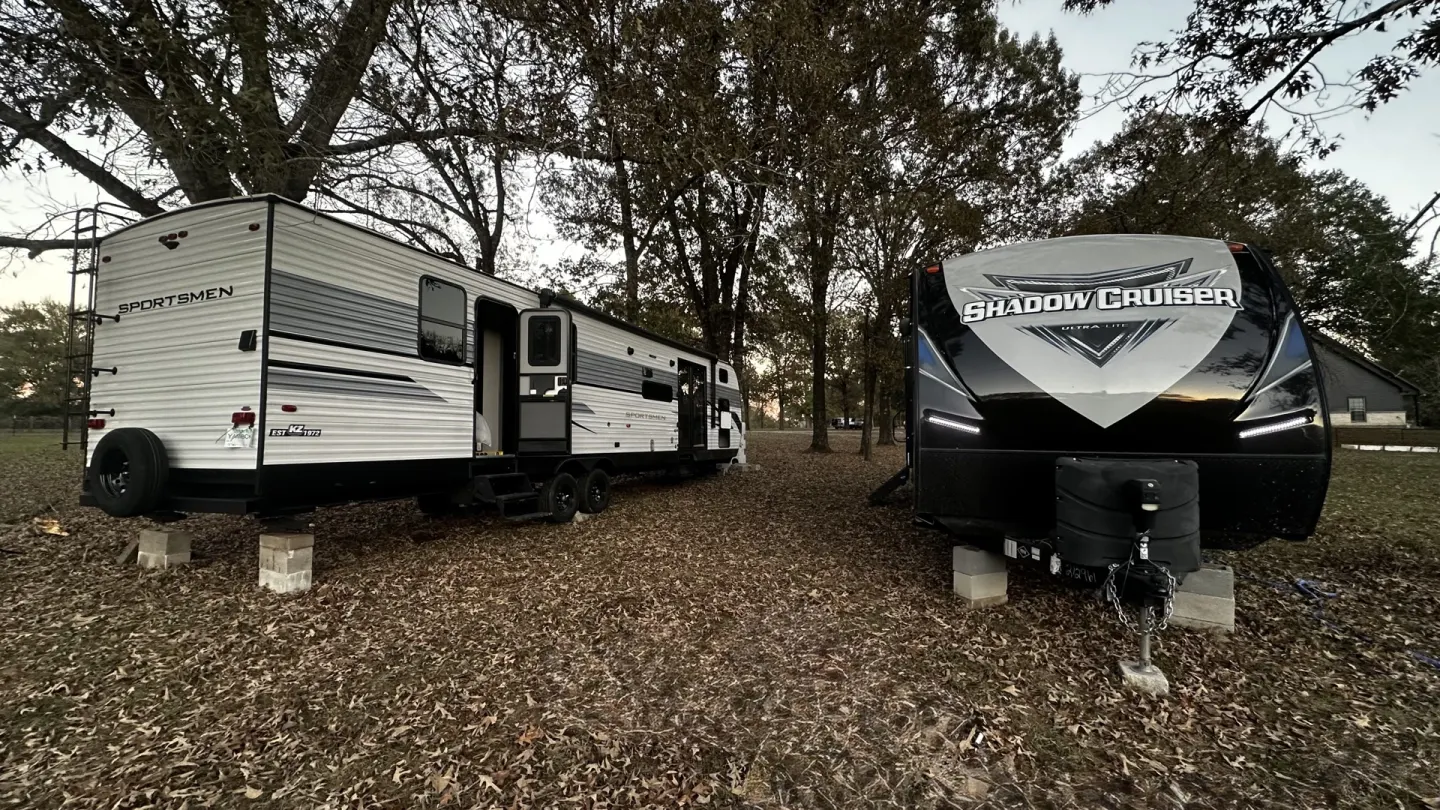
Two kinds of placement, run by the same team. For displaced residents, a furnished travel trailer on their own residential lot, sized to the household, so the family stays near the house, the contractor, the school, and the neighbors. For response crews, a set of units on a staging yard, a laydown area, or the job site itself, so the people doing the work sleep next to it. That resident placement is the same service we describe on on-site RV housing, applied at the scale of an event.
Every unit sleeps two to ten and arrives with a kitchen, a bathroom, real beds, heat and air, and a Temporary Housewares package so people walk in and live. Our driver delivers and levels the trailer. Utility connections are completed by licensed, insured contractors from our preferred vendor network. Scheduled service visits run for the length of the stay. Site conditions are documented at setup and again at takedown, in a form that drops into a reimbursement file. Temporary RV Living supplies and services the trailers.
How we surge
Units stage near the event, not at a yard three states away. The set scales with the event: it grows as the mission grows and comes down as the mission winds down, so nobody is paying for beds that are empty. One contact runs the deployment from the first call through the last pickup, for residents and crews alike. When the file needs a before and after of the ground itself, LossMap provides post-event aerial damage mapping, ordered through the same contact.
Who we serve
How it is billed
Direct to the agency, the prime contractor, the utility, or the carrier, whichever holds the file. One invoice per deployment, itemized by unit, site, and dates. The documentation package is built for audit and reimbursement: placement record, site conditions at setup and takedown, service log, and closing paperwork when the last unit leaves. The resident or the crew pays nothing out of pocket.
Since 2004
1st Choice Living began in disaster housing. Our first placements were families living on their own lots after a storm and the crews who came to rebuild the town around them. That work taught us how to stage near an event, how to set a unit on ground that has just been through the worst week of its life, and how to write the paperwork so it survives an audit. Disaster response is still where we work hardest.
FAQ
Can you house residents on their own lots after a declared disaster?
Yes. That is the placement we began with. We confirm the lot can take a unit, check the local rules on a temporary RV during a rebuild, and deliver a furnished trailer to the property. The family lives on their own land while the house is gutted and rebuilt, and the agency, contractor, or carrier that ordered the unit gets the documentation for the file.
Can you house a crew on a staging yard with no utilities?
Yes. We assess power, water, and sewer options during the site check and plan the set around what is there. Licensed, insured contractors from our preferred vendor network complete every connection, and scheduled service visits keep the units working for the length of the mission.
What documentation do you provide for reimbursement?
A placement record for each unit, site conditions documented at setup and again at takedown, a service log, and one invoice per deployment that ties every unit to the event, the site, and the dates. It is built so the person assembling a reimbursement or audit file does not have to chase us for anything.