
Storm damage has a shape. A tornado takes the roof and leaves the slab. A hurricane peels the shingles, then the rain finds the open decking and comes through every ceiling. Hail punches the roof and the siding and the windows all at once. In each case the house is usually still there, which is what makes storm displacement confusing: it looks like you should be able to go home, and you cannot. 1st Choice Living began in disaster housing in 2004 and has placed furnished travel trailers on homeowners’ own property, nationwide, ever since. This is what we tell families on the first call.
Roof gone, house standing
This is the common storm case. The structure is intact, the roof is open or gone, and the interior is wet, unsafe, or both. The first few days go like this.
- Make it safe, then stop. Get out if the ceilings are sagging or there is a gas smell. Turn off power at the main if water reached the panel or the outlets. Do not climb on the roof.
- Tarp it. Most policies expect you to prevent further damage once it is safe to do so, and a tarped roof keeps the next rain out of the rooms that are still dry. Keep the invoice; emergency tarping is usually part of the claim.
- Photograph everything. The roof from the ground, every room with a wet ceiling, every window, the fence, the car in the driveway. Video walk-through, narrated. Do this before anything is cleaned up or thrown out.
- Open the claim and ask about Additional Living Expenses. ALE, sometimes called loss of use, pays for somewhere to live while the house is not livable. Ask whether your policy includes it and what the limit is. That answer decides how your housing gets paid for.
- Keep every receipt. Tarps, hotel nights, meals, laundry, pet boarding, fuel. These are what you submit under ALE.
If the water came from a river or surge rather than the roof, read our flood guide. If lightning started a fire, read our house fire guide.
Why storm claims move slowly
A house fire is one claim in one town. A hurricane is every house on the coast on the same afternoon. That changes everything about the pace.
- Thousands of claims at once. Your carrier opens more files in a week than it normally does in a season. Every one of them needs an inspection before money moves.
- Adjusters deployed from out of state. Carriers bring in catastrophe teams to cover the volume. Your adjuster may be new to the area, may be reassigned partway through, and may be working from a hotel two hours away.
- Contractor backlogs. Every roofer in the region has the same phone ringing, and materials run short. The good contractors are booked out.
We do not give timelines, and you should be careful with anyone who does. How long this takes depends on the damage, the contractor, the permit office, and how many other houses are in line ahead of yours. Plan for a longer stay than you hope for.
Stay on your lot, keep your place in line
Being on the property matters more after a storm than after almost any other loss. The adjuster shows up when the adjuster can. The roofer shows up when the roofer can. If you are living an hour away, you miss both, and the file waits until the next opening. If you are on the lot, you walk out the door.
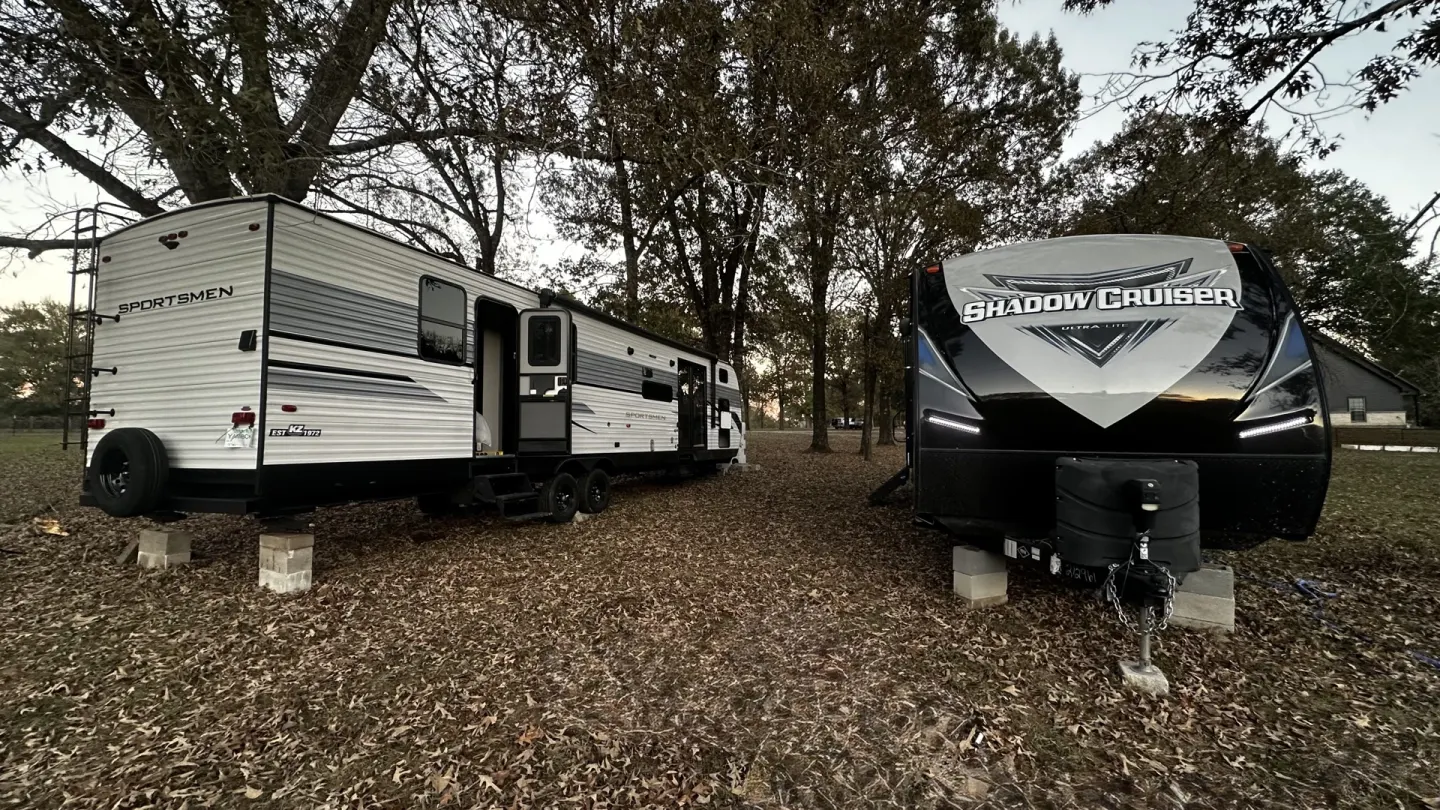
That is the case for on-site RV housing. We deliver a fully furnished travel trailer to your property, level it, set it up, and connect it. You sleep in your own driveway, your kids stay in their school, your pets stay home, and you are there for every visit that moves the claim forward.
What that includes:
- A furnished unit that sleeps two to ten, with a kitchen, a bathroom, real beds, and heat and air. Housewares come from Temporary Housewares, which also helps when the storm took the contents along with the roof.
- Local rules checked before delivery. Some places need a temporary-use permit for an RV on a residential lot during a repair. We confirm what your address requires.
- Utility connections completed by licensed, insured contractors from our preferred vendor network, planned around what is actually working at the property.
- Site conditions documented at setup and again at takedown.
- Scheduled service visits for the length of the stay.
- One named contact from the first call to the day the unit leaves.
- Direct billing to your carrier under ALE where the claim covers it. We track the stay against your ALE limit. On a covered claim that is $0 out of pocket for your family.
Curious what day to day life in one is like? See living in a travel trailer.
Aerial documentation of the damage
After a storm, the roof is the claim, and it is the one part of the house you should not climb on to photograph. LossMap provides aerial and photo documentation of the roof and the property, so the claim file shows what the storm did before the tarps and the repairs change the picture. Ask your adjuster whether that record would help the file.
When the whole town is affected
When one house loses a roof, there is a hotel room somewhere. When the whole town is hit, the hotels fill, the rentals go, and the rooms that are left go to the line crews and the contractors who came to rebuild. On-site placement does not compete for any of that. The trailer is staged near you and goes on ground you already own.
The same units house the people doing the work. Utilities put line crews in them. Rebuild contractors put their teams in them. Agencies use them for the staff they send in. That side of the business is on our disaster response and workforce housing pages. If you are an adjuster or carrier reading this for a policyholder, start at for adjusters and carriers.
Questions to ask your adjuster
Write these down before the call. Specific questions get specific answers.
- Is the roof a full replacement or a repair in your assessment, and what does the policy pay on each?
- Is emergency tarping covered, and do you need the invoice or the photos first?
- Does this claim include Additional Living Expenses or loss of use, and what is the limit?
- Is temporary housing on my own property an eligible expense, and can the provider bill you directly?
- Do you need a contents inventory, and in what format?
- When is the inspection scheduled, and do I need to be on the property for it?
- Will you accept aerial documentation of the roof in the file?
- Is there a separate wind or hail deductible on this policy, and how much is it?
- If you are reassigned, who becomes my contact and how do I reach them?
- What does this claim not cover that I should plan for myself?
Frequently asked questions
Can I put a trailer on my lot after a hurricane?
In many places, yes. Cities and counties often allow a temporary RV on a residential lot during an active repair, and some require a temporary-use permit. After a large storm, some jurisdictions relax those rules and some tighten them. We check the local rules for your address before delivery.
Does my policy cover it?
Many homeowner policies include Additional Living Expenses, also called loss of use, which pays for somewhere to live while the house is not livable. Whether yours does, and what the limit is, is a question for your adjuster. When the claim covers it, we bill the carrier directly and track the stay against the ALE limit.
What if my power is out for weeks?
Utility connections for the unit are completed by licensed, insured contractors from our preferred vendor network, and they plan around what is actually available at the property. If grid power is out, they assess the options for the site rather than assume a connection that is not there.
How do I start?
Call us or send the request form. We ask about the property, the claim, and how many people need beds. You get one named contact, we confirm the local rules, and we coordinate delivery, setup, and utilities with your adjuster in the loop.
Stay on your lot while the roof goes back on
Call or send the request form. One named contact, permits checked before delivery, direct billing to your carrier where the claim covers it.
Want the details on placement first? Read about on-site RV housing.