
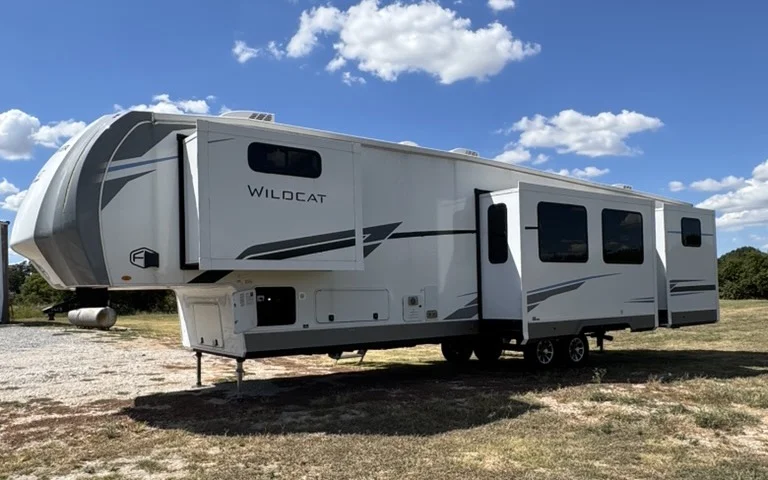
Most temporary housing providers solve displacement by moving you further away: into a hotel room, a leased apartment, or someone else’s unit across town. 1st Choice Living solves it differently: we bring a fully furnished RV or travel trailer directly to your property and set it up on your own land, so the only thing that changes during your rebuild is where you sleep. Not your neighborhood, your commute, your kids’ school, or your sense of home.
How Onsite Placement Works
Once your property is confirmed for delivery, our team evaluates ground conditions, driveway or yard access, and utility hookup points: water, sewer or septic, and electrical. Most residential properties can accommodate a unit with standard hookups; rural and larger properties may support additional options. We handle delivery, leveling, and hookup, so the unit is ready to live in as soon as it’s parked. Where utility work is needed, it’s completed by licensed, insured contractors from our preferred vendor network. Most temporary housing providers skip that step entirely, because most never place a unit on your property in the first place.
What’s Included
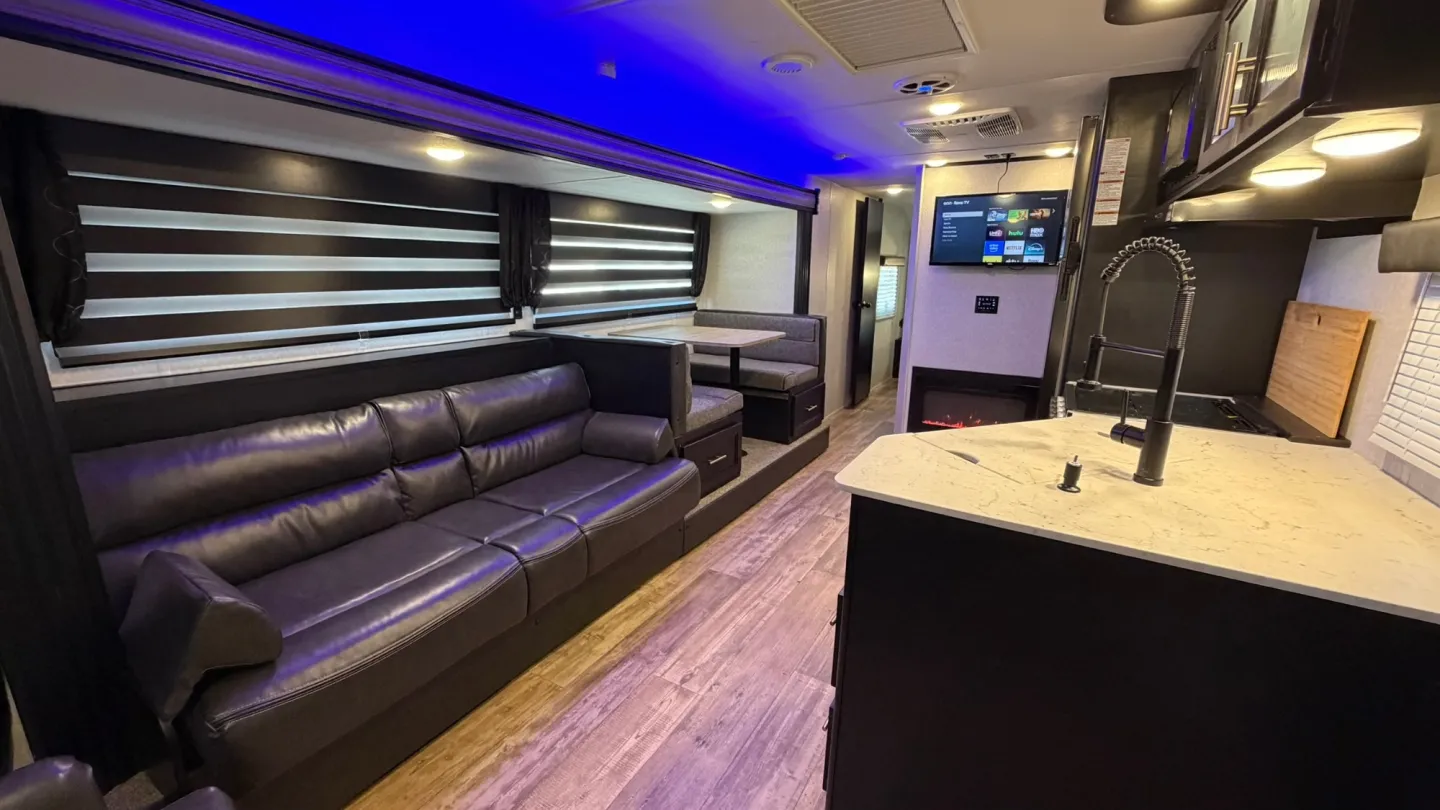
Every unit arrives fully furnished: kitchen appliances, air conditioning and heat, real beds, and the basic household items most families need on day one. Pair it with a Temporary Housewares package for anything extra, from linens to small appliances. You don’t have to buy furniture for a home you won’t be in permanently.
Who This Is For
Onsite RV housing works for more than house fires. We place units for flood and stormdisplacement, for families managing a long insurance claim, for construction crews and workforce teams who need to stay near a job site, and for medical or transitional housing situations where staying local matters. Whatever brought you here, the goal is the same: keep you close to what’s familiar while the work gets done.
Permits and Placement
Rules about placing a temporary RV on residential property vary by city and county. Some jurisdictions allow it outright during an active rebuild permit, others require a separate temporary-use permit, and a few restrict it further. We help you figure out what applies to your property before delivery, so there are no surprises with your local permitting office.
Paid Through Your Insurance Claim
Most onsite RV housing under an active insurance claim is billed directly to your carrier as part of your Additional Living Expenses (ALE) coverage, so you’re not paying out of pocket and waiting on reimbursement. If you’re not sure what your policy covers, we can walk through it with you or work directly with your adjuster. For the time and dollar limits as State Farm, Allstate, USAA, Farmers, and Erie publish them, see loss of use coverage by insurance carrier.
Frequently Asked Questions
Can I put an RV on my property while my house is rebuilt?
In most cases, yes. Many cities and counties allow a temporary RV or travel trailer on a residential property during an active rebuild, especially with a building permit already in place. Requirements vary by jurisdiction, so we check your local rules before delivery.
Do I need a permit for a temporary RV on my property?
Sometimes. Some areas require a temporary-use permit for an RV on a residential lot even during a rebuild; others don't. We help confirm what your specific city or county requires before setup.
How long can I stay in an onsite RV after a house fire or other disaster?
It depends on your rebuild timeline and your insurance policy's Additional Living Expenses (ALE) limits, and coverage periods vary by policy. We offer flexible short-term and long-term leasing to match whatever your claim allows.
Questions about delivery, setup, or what happens during your stay? Our placements team runs every placement from the first call to move out. Call (214) 493-1515.