
When a wildfire, a hailstorm, or a flood leaves your Colorado home unlivable, your homeowners policy may pay for somewhere to stay while it is rebuilt. For many families, the best place is still home: a furnished travel trailer set up on your own lot, close to school, work, your pets or livestock, and the crew rebuilding the house. 1st Choice Living has provided on-site temporary housing nationwide since 2004, and this page explains how it works in Colorado.
What Colorado homeowners are recovering from
The Aspen Acres Fire was reported on June 29, 2026, in eastern Custer County and spread into Pueblo County. The Colorado Division of Homeland Security and Emergency Management reports that it burned more than 102,000 acres and destroyed 324 homes, making it the state’s most destructive wildfire by homes lost since the 2021 Marshall Fire. The state’s recovery center reports that FEMA Individual Assistance was denied for the 2026 fires, which leaves insurance as the main source of help with living expenses for many of those families.
Wildfire is not the only risk. The Colorado Division of Insurance reminds homeowners to be prepared for wildfires, hail, floods, tornadoes and windstorms, severe thunderstorms, and extremes of heat and cold.
How the Colorado Division of Insurance explains additional living expenses
The Colorado Division of Insurance explains that additional living expense coverage, also called loss of use or Coverage D, may help pay the increased cost of living somewhere else when you cannot safely live in your home because of a covered loss. Key points from the Division:
- It pays the increase. The Division says ALE generally pays what you spend above your normal living costs, and it lists other temporary housing alongside hotels, short-term rentals, and apartments.
- At least 12 months. For a homeowners policy on a primary residence, the Division explains that state law requires ALE to be available for at least 12 months, and the insurer must offer you the chance to buy a total of 24 months.
- Longer after a declared wildfire. For an owner-occupied home that is a total loss in a wildfire disaster declared by the Governor, the Division explains that ALE must be available for at least 24 months, with up to two six-month extensions offered when you are making a good-faith effort to rebuild and permitting or reconstruction delays are outside your control.
- Keep records from day one. The Division says to keep records from the start of your displacement and to submit them regularly rather than waiting until the end.
This is general information, not legal or coverage advice. Your policy and your adjuster decide what is covered.
How a trailer on your lot works with your ALE
1st Choice Living bills your carrier directly under ALE, so on a covered claim you pay $0 out of pocket. We track your placement against your ALE limit, so you and your adjuster can see where things stand while the rebuild moves forward. You have one named contact from the first call to pickup.
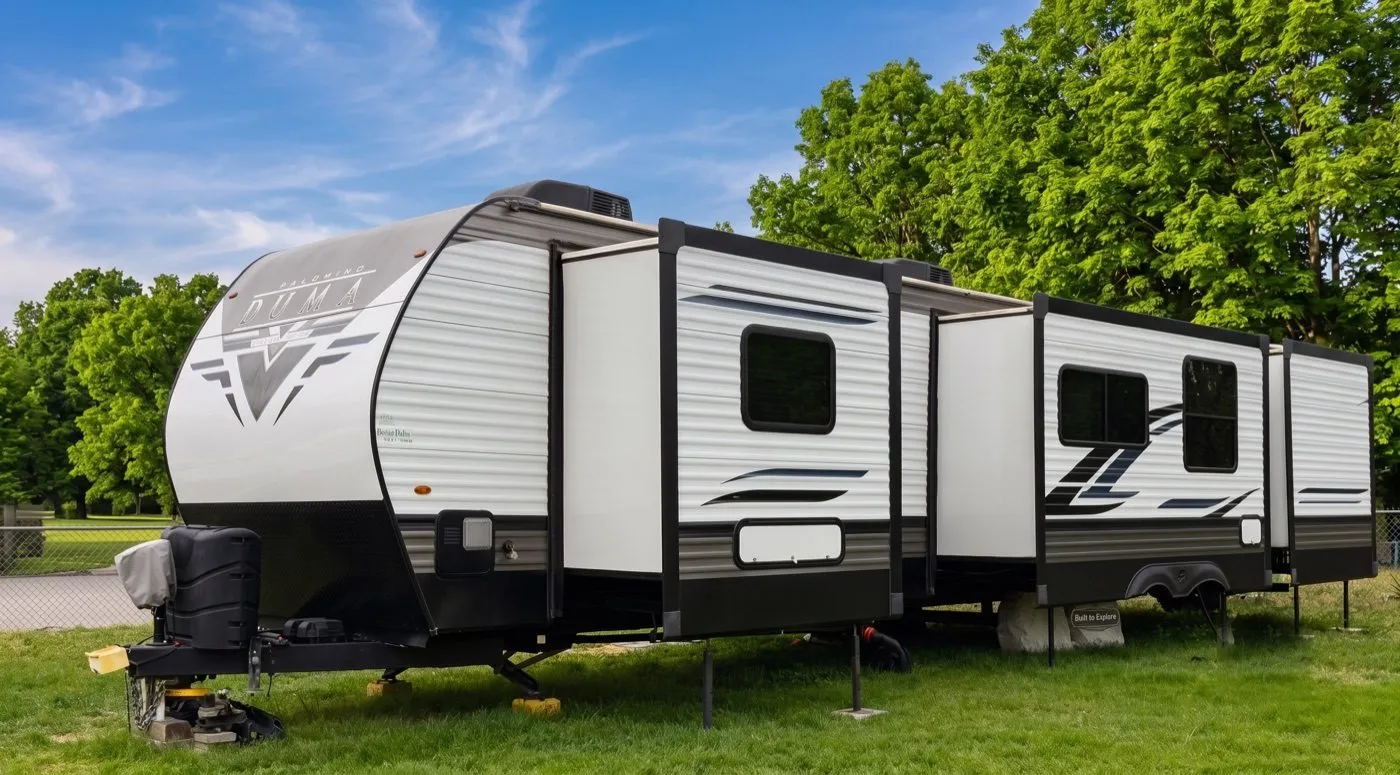
Our furnished travel trailers sleep 2 to 10. We deliver, level, and set up the unit on your property, whether that is a city lot or acreage. Utilities are connected by licensed, insured contractors. We document site conditions at setup and takedown, so everyone has a clear record.
Local rules in Colorado are set by your city or county
We did not find a statewide Colorado rule on living in a travel trailer on your own lot while you rebuild. It is handled by your city or county, and rules in town can be very different from rules in a mountain or rural county.
We check your local rules before delivery. If you want a head start, call your city or county building or planning office and ask about temporary occupancy of a travel trailer during repairs.
Colorado recovery resources to know
The Colorado Division of Homeland Security and Emergency Management’s Recovery Section leads the state recovery process, and its Disaster Information Hub links to every disaster the state is currently supporting. When a federal declaration includes Individual Assistance, you apply with FEMA at DisasterAssistance.gov or 1-800-621-3362.
For insurance questions, the Division of Insurance Consumer Services Team is at 303-894-7490 or 800-930-3745.
For crews and agencies working in Colorado
The same furnished units house crews on job sites and support agencies coordinating displaced households. Adjusters get one named contact and a placement tracked against the policy limit.
Frequently asked questions
Will my Colorado homeowners policy pay for a travel trailer on my property?
The Colorado Division of Insurance explains that additional living expense coverage may help pay the increased cost of living somewhere else when you cannot safely live in your home because of a covered loss, and it lists other temporary housing alongside hotels and apartments. Your carrier and adjuster decide what is approved. We bill the carrier directly, so a covered claim is $0 out of pocket for you.
How long does ALE last in Colorado?
The Division of Insurance explains that, for a homeowners policy on a primary residence, state law requires ALE to be available for at least 12 months, and the insurer must offer you the chance to buy a total of 24 months. Your declarations page shows what your policy has.
My home was a total loss in a wildfire. Is ALE different?
It can be. The Division explains that for an owner-occupied home that is a total loss in a wildfire disaster declared by the Governor, ALE must be available for at least 24 months, with up to two six-month extensions offered when you are making a good-faith effort to rebuild and permitting or reconstruction delays are outside your control. Ask your adjuster whether your loss qualifies.
Do I need a permit to live in a trailer on my own lot in Colorado?
It depends on your city or county. We did not find a statewide Colorado rule. We check local requirements before delivery.
Who pays for the trailer?
On a covered claim, we bill your carrier directly under ALE and you pay $0 out of pocket. We track the placement against your ALE limit so you and your adjuster know where it stands.
Get started
Send us your claim number, your adjuster's contact, and the property address. We confirm the local rules and set up a furnished unit on your property.
Want the details on placement first? Read about on-site RV housing.
Sources
- https://dhsem.colorado.gov/press-release/governor-polis-requests-major-disaster-declaration-to-support-recovery-from-aspen
- https://www.fema.gov/disaster/5642
- https://mars.colorado.gov/DAC
- https://doi.colorado.gov/types-of-insurance/homeowners/renters-insurance/being-prepared/are-you-disaster-ready
- https://doi.colorado.gov/2026-wildfire-information
- https://mars.colorado.gov/recovery-0
- https://mars.colorado.gov/CORecovery
Other states
Alabama, Florida, Georgia, Louisiana, North Carolina, Oklahoma, South Carolina, Tennessee, Texas