
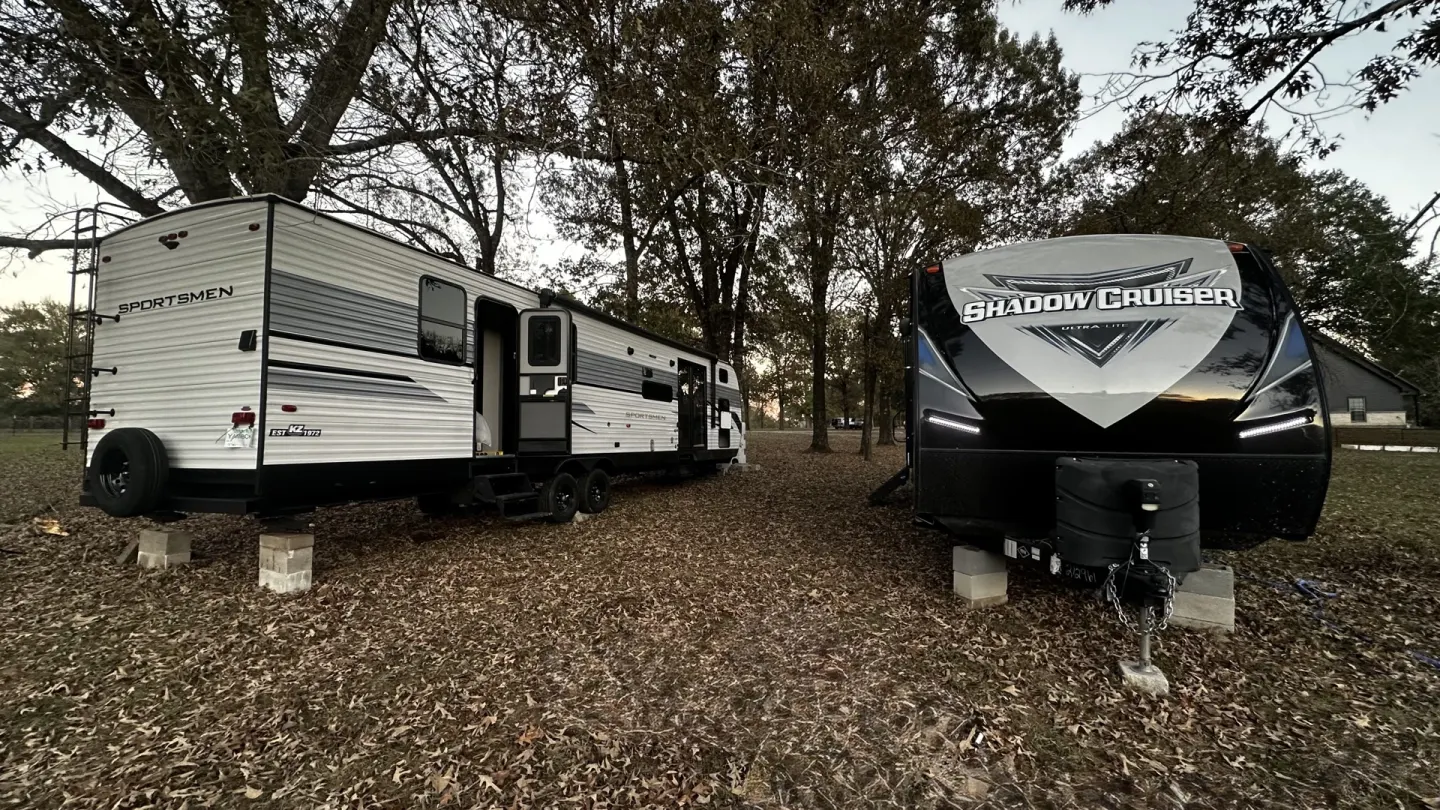
Pads and pipeline spreads go where the resource is, not where the rooms are. The nearest town can be an hour each way, and the motel there is already full of every other crew working the area. We place furnished travel trailers on or next to the pad, the yard, or the right-of-way camp, so the crew sleeps near the work and starts the tour on location.
The problem with the nearest motel
Remote work runs into the same wall on every job. The rooms closest to location are booked by the rig crews, frac crews, and service hands who got there first. The next town over means a long drive before the shift and another one after it, on lease roads and county roads in the dark. That windshield time is paid time that produces nothing, and it eats into the shift from both ends. Per diem does not fix it. It moves the problem onto the crew and leaves the office reconciling receipts.
What we deploy
Furnished travel trailers, placed on or next to the pad, the yard, or the right-of-way camp. Each unit sleeps 2 to 10 and has a kitchen, a bathroom, real beds, and heat and air. Housewares are included, so the crew walks in ready: sheets on the beds, cookware in the kitchen, nothing to pick up on the way out to location.
- Utilities connected by licensed, insured contractors from our preferred vendor network.
- A site check before anything moves, to plan power, water, and sewer on raw ground.
- Scheduled service visits for the life of the job.
- Units stay for the job while crews rotate through them.
Scaled to the work
One unit for a company man or a superintendent who needs to be close to location. A row of units for a rig crew. A full camp for a pipeline spread working its way down the right-of-way. As the job ramps, we add units. As it winds down, we pull them, so you are not paying for beds nobody is sleeping in. Tell us the schedule and the headcount by phase, and we plan the housing to match.
How it is billed
One contract and one invoice per project, sent direct to the operator or the contractor. No per diem reconciliation and no stack of motel folios to chase at month end. Terms run month to month or for the life of the job, whichever fits the work. Housing shows up as one line your contracts group can track against the job.
Site conditions, documented
Leased land and right-of-way come with obligations to the landowner. We document site conditions at setup and again at takedown, so there is a record of what the ground looked like before the units arrived and after they left. That record goes to you, and it is there if a landowner or a surface agreement ever raises a question.
Where this work started
Our crew housing grew out of disaster response: teams rebuilding after a storm, in places where the hotels were gone and there was nothing to rent. Oil field work has the same shape. It is remote, it recurs, and there is nowhere nearby to put a crew. The same units, the same setup, and the same service schedule fit both.
FAQ
Can you place units on a lease road or a pad location?
Often, yes, subject to the operator’s site rules and what the ground will support. We plan placement on the site check before anything moves, and where the pad itself is off limits we look at the yard or the nearest suitable ground.
What about power on a remote site?
Licensed, insured contractors assess power, water, and sewer options on the site check and plan around what is there. Remote locations rarely look alike, so the utility plan is built for the location instead of assumed.
Can crews rotate through the same units?
Yes. The units stay on location for the job and the occupants change with the rotation. Scheduled service visits keep them ready for the next hitch.